
The Eight Days That Quietly Changed My Life
- Sebastian Lozano Benavides
- Feb 23
- 5 min read

Updated: Apr 15
There are trips you take for photos.
And there are trips that rearrange your inner world without asking for permission.
In my mid-twenties, I flew to Bali, in Indonesia, thinking I needed a break. I was living
in Australia - structured, organized, rule-driven - a country that works beautifully, but
sometimes feels tightly measured. I didn’t realize that what I was really craving
wasn’t rest.
It was freedom.
What followed were eight days that felt longer than months. Eight days that stretched
my perspective, softened my judgments, and reminded me how it feels to be fully
alive.
First Stop: Ubud - Where Nature Strips You Down
My journey began in Ubud - jungle, humidity, incense in the air, and rice terraces
cascading down hills like green staircases carved by hand.
Ubud feels ancient. Alive. Spiritual without trying to be aesthetic.
We rented a motorbike with surprising ease, and that decision changed everything.
Riding through narrow streets, merging into chaotic traffic, passing locals, tourists,
temples, markets - I felt awake in a way I hadn’t in years. There’s something about
navigating unfamiliar roads on two wheels that makes you present. Every turn
matters. Every second demands attention.
I wasn’t watching Bali.
I was inside it.
We rode through endless rice fields. We visited temples, including the sacred water
temple, Tirta Empul Temple, where locals and visitors step into holy spring fountains
for purification rituals. The scent of incense mixed with stone and humidity. The
sound of prayers blending with running water.
Everywhere we walked, there were offerings - small woven palm-leaf baskets filled
with flowers, rice, sometimes candy or biscuits, always incense. These daily
offerings, known as canang sari, are acts of gratitude and balance. Families place
them every morning. Some are for protection. Some for prosperity. Some simply to
say thank you.
And they are everywhere.
On sidewalks. In front of stores. On motorbikes. At the entrance of every house.
Because every house has its own temple.
Faith in Bali is not reserved for special occasions. It is stitched into daily life.
Our hotel in Ubud was hidden in nature - surrounded by trees, open air, and the
constant rhythm of birds and rain. The pool overlooked greenery. The architecture
blended into the jungle instead of competing with it.
But what made it unforgettable wasn’t the design.
It was the warmth.
The staff remembered us. Asked daily if we needed anything. Paid attention. There
was care in the smallest gestures. It felt human.
And yet, we didn’t stay inside comfort. We entered the traffic. The markets. The
alleyways where artisans sold handmade crafts. We visited the Sacred Monkey
Forest Sanctuary and walked among moss-covered temples and free-roaming
monkeys.
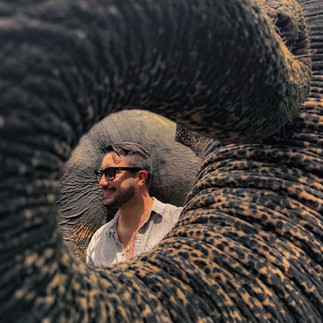
We also visited an elephant sanctuary - an experience layered with complexity.
There has been controversy around elephant tourism, and many travelers avoid
these places for ethical reasons. That concern is valid.
But speaking directly with the caretakers added depth. For generations, their families
have worked with elephants. They explained how tourism funds food, veterinary
care, and land protection. They acknowledged that global perspectives have shifted,
and because of that, they restructured their experiences - moving toward less
invasive interactions.
It wasn’t black and white.
It was tradition meeting modern ethics.
And it reminded me how easy it is to judge from far away without understanding local
realities.
Ubud gave me contrast: serenity and chaos, spirituality and traffic, comfort and
rawness.
It grounded me.
Second Stop: Seminyak - Where Energy Takes Over
Then came Seminyak - and everything changed.
If Ubud whispers, Seminyak pulses.
Suddenly, we were surrounded by nightlife, restaurants on every corner, boutiques,
beach clubs, shopping centers, music, movement. Our hotel was located on a busy
avenue filled with constant activity - cars, scooters, people, lights.
It was vibrant. Loud. Alive.
Seminyak felt like a classic beach destination - vendors, packed streets, sunset
cocktails, international cuisine. We spent afternoons at beach clubs watching the sun
dissolve into the ocean from infinity pools, music playing softly, drinks in hand.
There is indulgence there - good food, alcohol, atmosphere. And I enjoyed it.
Seminyak is for those who want contrast. For travelers who want disconnection from
routine, but not from excitement. It’s for people who want to relax on the beach
during the day and step into curated nightlife in the evening.
It’s adventure in a social form.
After the deep grounding of Ubud, Seminyak reminded me that joy can also be loud.
That celebration has its place too.
Final Stop: Nusa Penida - Where Beauty Demands Courage
The last chapter of my journey was Nusa Penida.
To get there, we took a 45-minute boat from Sanur. The island immediately felt
different - more remote, less polished, more raw.
Nusa Penida is not effortless tourism.
It requires intention.
Transportation is limited. To explore, you either rent a motorbike or hire a private
driver. Roads are not always in perfect condition. Distances between destinations
are long. It’s more expensive in some ways because logistics are harder - no easy
deliveries, no widespread taxis.
But that’s also its magic.
We rented a motorbike again and rode through long stretches of green hills, trees,
birds, and open sky. The hotel was isolated, surrounded by the ocean and nature.
Every destination required effort - and that effort made it meaningful.
We visited Crystal Beach. Cliffside restaurants with breathtaking viewpoints. And of
course, the iconic Kelingking Beach - the dramatic T-Rex-shaped cliff overlooking
impossibly turquoise water.
The view from above is surreal.
But we decided to go down.
And that decision turned into one of the most intense physical challenges of the trip.
The descent is steep. Extremely steep. It’s not a casual walk - it’s a controlled climb
down a cliff, holding onto railings and rock formations. I wasn’t fully prepared. I didn’t
have the right shoes. I didn’t carry enough water. Halfway down, I wasn’t thinking
about the beach anymore - I was thinking about the climb back up.
Because once you go down, the only way out is up.
Boats cannot access the beach easily due to strong waves. There’s no alternative
exit. At one point, the government began building an elevator system, but public
concern about over-tourism and environmental damage stopped the project.
So if you go, you commit.
The climb back up was brutal. It felt like scaling rock in heavy humidity, holding onto
whatever you could find. But I don’t regret it.
Nusa Penida teaches you something simple: beauty sometimes requires effort.
Preparation matters. Respect for nature matters.
It’s not about criticizing the island - it’s about understanding that going there means
being ready. Good shoes. Water. Sun protection. Awareness.
And if you are prepared, it is unforgettable.
The Perspective That Stayed With Me
In eight days, I experienced jungle stillness, urban vibrancy, and remote wilderness.
I didn’t visit everything. I didn’t make it to the famous “Gates of Heaven” temple at
the far end of the island. And that’s okay. It gives me a reason to return.
Because I will return.

Living in Australia, where everything is organized, regulated, structured - Bali felt like
emotional oxygen. It felt less monitored. Less judged. Freer. I could be spontaneous.
Imperfect. Present.
Bali is not just a tourist destination.
It’s contrast.
It’s chaos and calm. Luxury and simplicity. Tradition and modern tension. Effort and
reward.
It’s a place where daily offerings remind you to be grateful. Where traffic teaches
patience. Where jungles silence your ego. Where cliffs test your courage.
I went for eight days.
And I came back different.
Not dramatically.
But deeply.


Comments